



Peer Support
If you’ve ever experienced a breakup, had conflict with a friend, awaited news about your health, or provided care for a loved one, you understand the difference between talking about it with someone who has had a similar experience versus a sympathetic listener. That’s what makes peer support unique. Peer support is rooted in the sharing of lived experiences that allow people to connect with and support one another.
What can I expect from peer support?
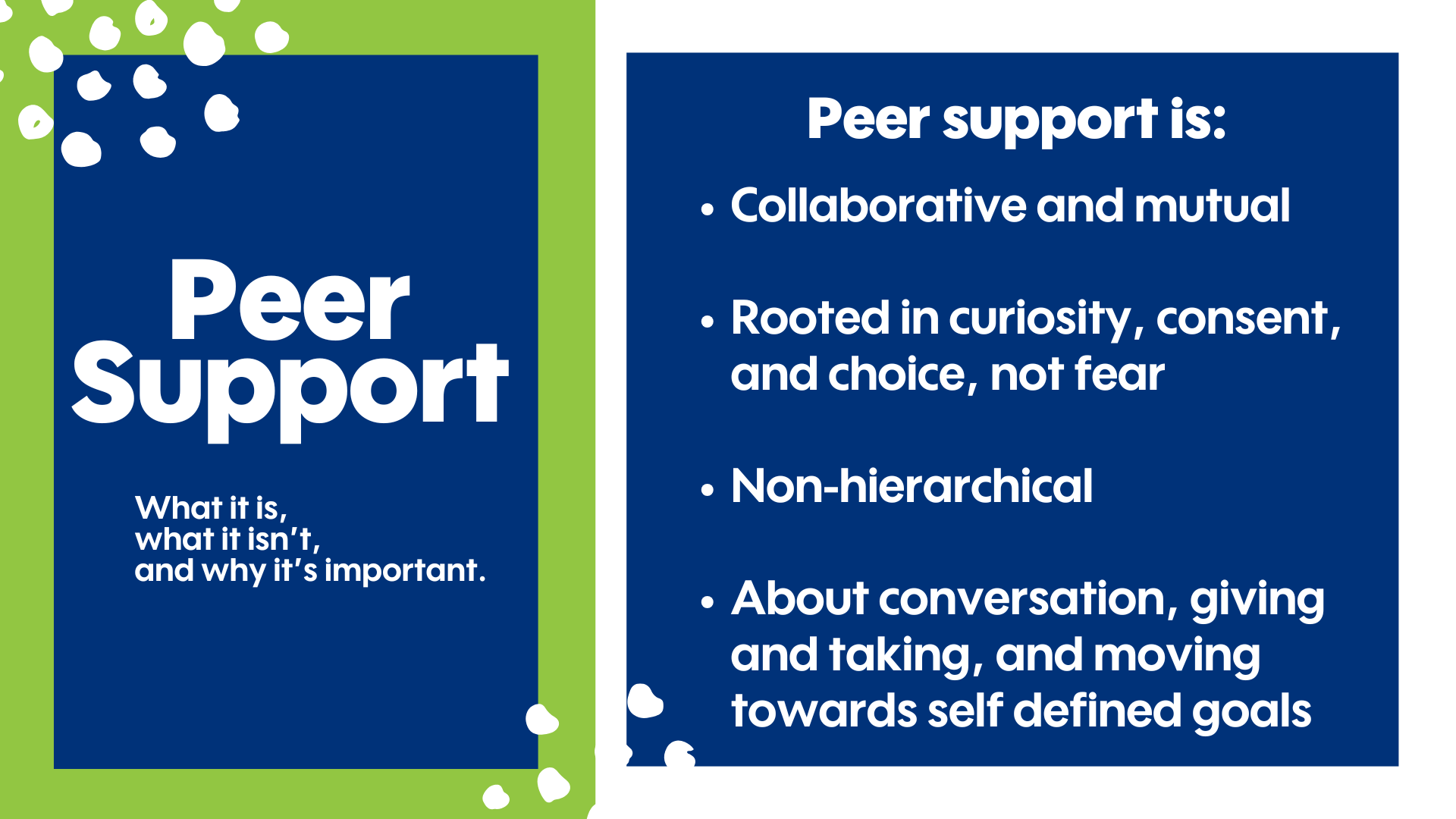
Peer support is collaborative and mutual, so all parties are learning and growing alongside each other. During peer support groups, participants and facilitators are encouraged to talk about their experiences, offer connections, and share ideas and resources with each other. Some groups center around specific topics or shared identities and other groups offer more general support. At its core, peer support about dialogue, transforming relationships, and building community. Peer support is voluntary and confidential, meaning you decide whether or not you want to participate and what you share is not shared outside of the peer support relationship or group.
“Quinn has been there to talk with me about whatever has been going on in my life, and they have supported me through the ups and downs I have experienced. Overall, having Quinn as a mentor and a supporter has been an awesome experience, as they have been there to talk with me and have offered insight and guidance when I needed it. I think every teenager/young adult should be able to have someone like that!”
-E, peer support participant
Where can I find free peer support?
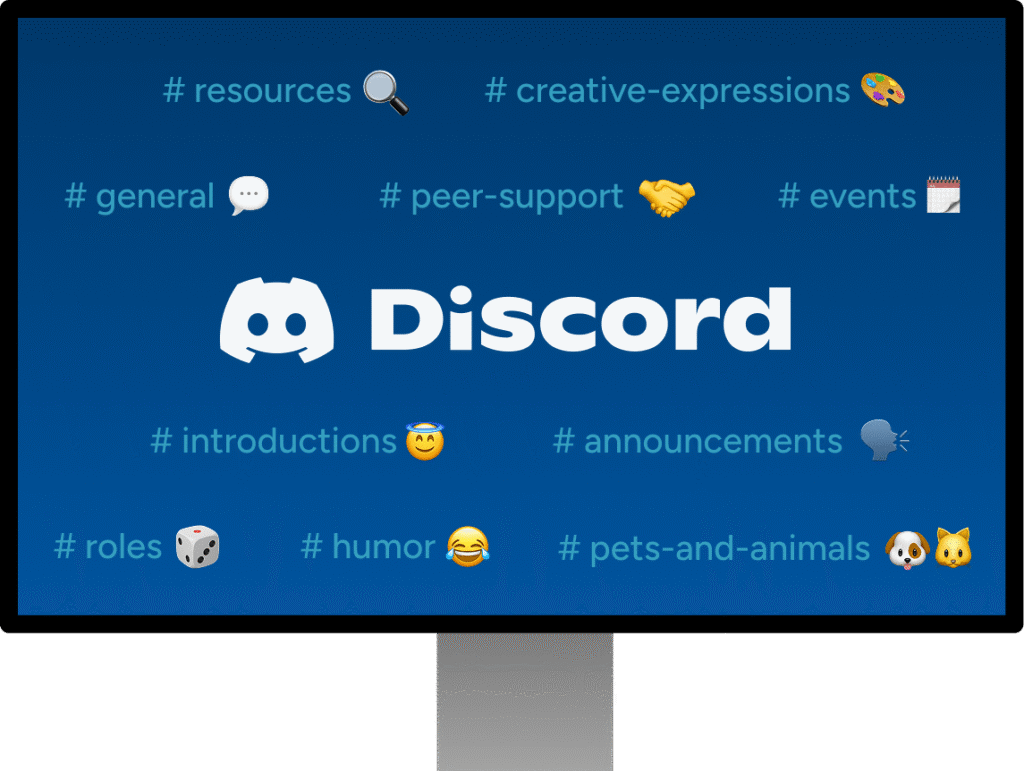
CT Support Group offers free peer support to teens and young adults on our Discord Server and in person. Check out our Peer Support Offerings page for listings of peer supporters and peer support groups throughout Connecticut and online. Can’t find what you’re looking for? Send us an email at ctsg@positivedirections.org and we’d be happy to connect you!
Why is peer support important?
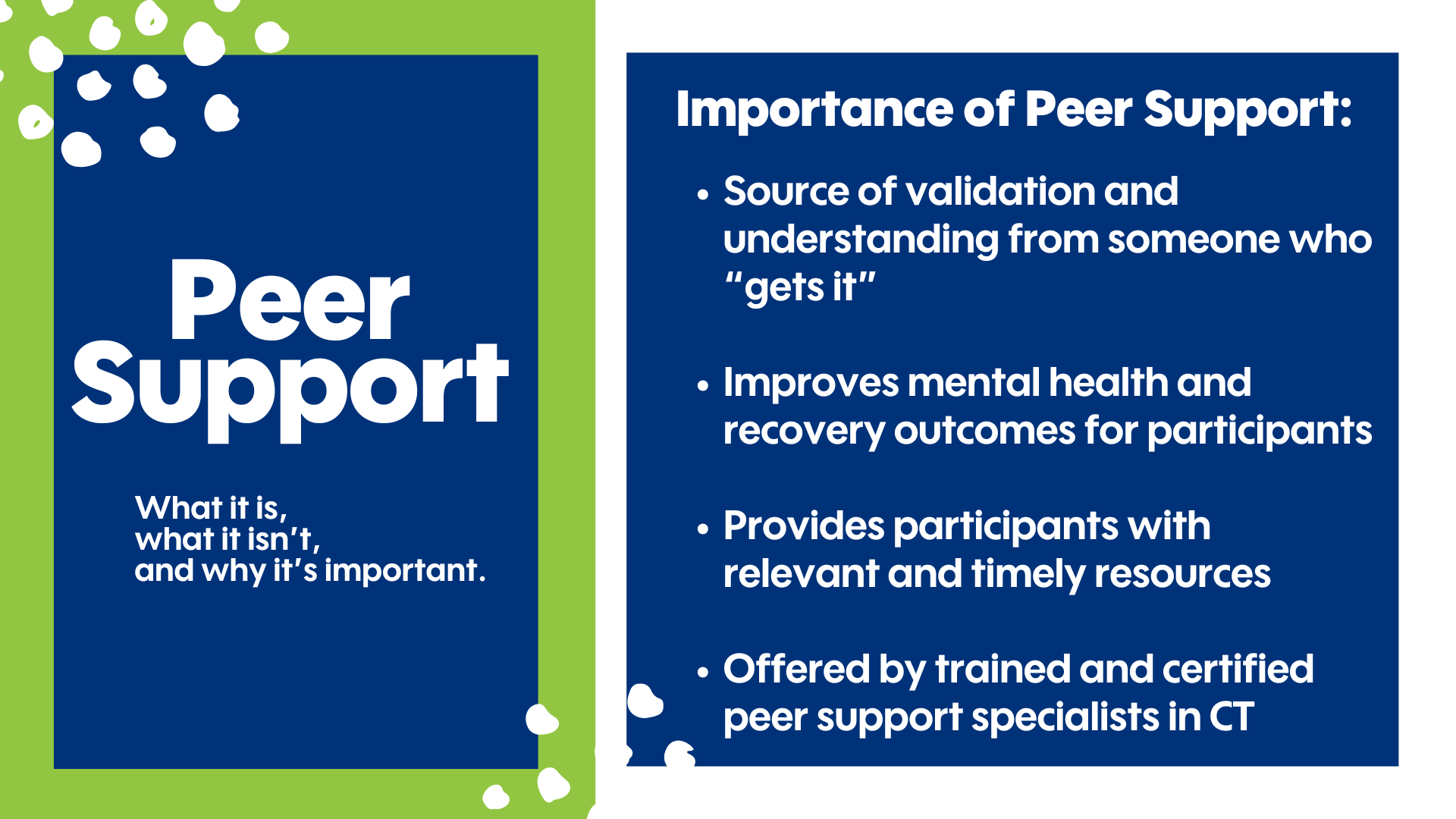
Peer support is important for so many reasons. It is a source of validation and understanding from someone who “gets it”. Having that shared lived experience is important — especially for young people facing isolation and disconnection.
Peer support improves mental health and recovery outcomes for participants. SAMHSA has a plethora of literature demonstrating the effectiveness of peer support.
Peer supporters are trained to provide relevant and timely resources to participants and are equipped with a variety of tools and skills for supporting folks on their recovery journeys.
What are the differences between peer support and therapy?
Peer supporters and clinicians have different education and trainings; peer support specialists are typically certified to provide peer support and clinicians are required to obtain and maintain a license to practice. Peer supporters use their lived experience to connect with and support participants in moving towards their self-defined goals without giving advice or attempting to change participants’ behavior. Therapists and clinicians typically use specific therapeutic treatments and interventions to help clients develop and use healthier coping mechanisms. These interventions are based on clinical expertise and education rather than lived experience. Therapists and clinicians may use diagnoses to describe what clients are experiencing and to provide treatment. Peer supporters do not diagnose or treat the individuals they support. Some folks find it helpful to get peer support in addition to working with a therapist, and we encourage folks to explore what works best for them in moving towards their goals.
Do I have to be struggling to get peer support?
Not at all! Folks seek peer support for all kinds of reasons!