



Talk Therapy
Therapy helps you put a new perspective on things. And it’s your opportunity to vent, ask for advice, get feedback, and follow up on your goals with someone who’s trained to listen and help. Help is available even if you’re uninsured!
Try to keep an open mind. In therapy it’s really important to feel that you can be open, honest, and willing to do the work necessary. There is a right fit for you! Remember, if you don’t find that right therapist right away, try not to get discouraged. It might seem like it’s too hard, but just keep going and continue to seek help.

“Talking is the first step: don’t bottle! You should talk to someone who knows what to do, how to help you.”
What are the main types of talk therapy?
Cognitive therapy teaches you to recognize and correct your negative thoughts.
Behavioral therapy focuses on helping you change your patterns of behavior. Sometimes it involves gradually exposing you to things that make you feel anxious or that trigger you so that eventually you can get de-sensitized.
Can’t decide? A lot of people choose a form of therapy that combines aspects of both cognitive and behavioral therapy, such as CBT and DBT.
- Cognitive-Behavioral Therapy—aka CBT- helps you recognize the tough stuff going on in your life and the thoughts, emotions, and beliefs that come with it. In CBT you work on and challenge that inaccurate thinking.
- Dialectical Behavioral Therapy—aka DBT- uses mindfulness and other core skills to help you change your ineffective behaviors like self harm and substance abuse. You learn what your triggers are and figure out what coping skills to apply to your thoughts, feelings, and the situation.
Psychoanalysis is what Freud invented. It’s where you spend a lot of time over a long period getting into your past. It focuses on how these events might have helped shape the person you are today and do the things you do.

“CBT definitely! Looking at and analyzing the way that I interpret what goes on around me was really helpful.”
“DBT was one of the best decisions of my life, as much as I didn’t want to do it at the time. The radical acceptance was awesome.”
What’s the difference between individual and group therapy?
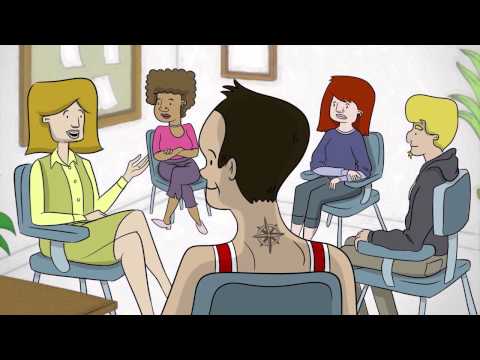
You can do therapy one-on-one or in a small group. A lot of people even do both.
Individual therapy normally meets once a week for a 45-50 minute session.
Group therapy is a good opportunity to hear from and share with your peers. You can get advice from people experiencing similar situations.
“I’ve had the same psychologist for 6 years now, and she’s seen me through so much. I love her to bits.”
What about family therapy?
Family therapists specialize in group dynamics. Their job is to help your family members work through conflict. They work with you and your family (or who you live with) to bridge gaps in communication.
BUT if you’re going to have your own therapist plus a family therapist, consider this:
Individual therapy normally meets once a week for a 45-50 minute session.
Group therapy is a good opportunity to hear from and share with your peers. You can get advice from people experiencing similar situations.
“My [personal] therapist was the same therapist the whole family saw and that was definitely a mistake. It feels like she’s shared, she’s not truly confidential.”